
Moses and Blessing in Benue State, Nigeria
STM Update 9.20.25
In the fall of 2024, two missionaries from the Agape Missions and Evangelistic Network (AMEN) began to form a Mission Base among the Agatu people in northern Benue State, Nigeria. The missionaries were Moses and Daniel and their goals were to:
They started by renting an unfinished house as their base. It had no doors or windows and no toilet plumbing. Of course, no water or electricity either. Agatu LGA (LGA = county) where the 200,000 or so Agatu people mostly live is famous for it's large number and variety of venomous snakes, and on multiple occasions, they ventured into the open missionary house. STM was blessed to be able to help fund doors and windows and a drain field for the gravity toilet system. After the house was ready, Daniel went on to another field and Moses' wife Blessing and their four children joined them. Already a discipleship course for adults was underway and some educational activities for children were attracting large numbers.
Photos:
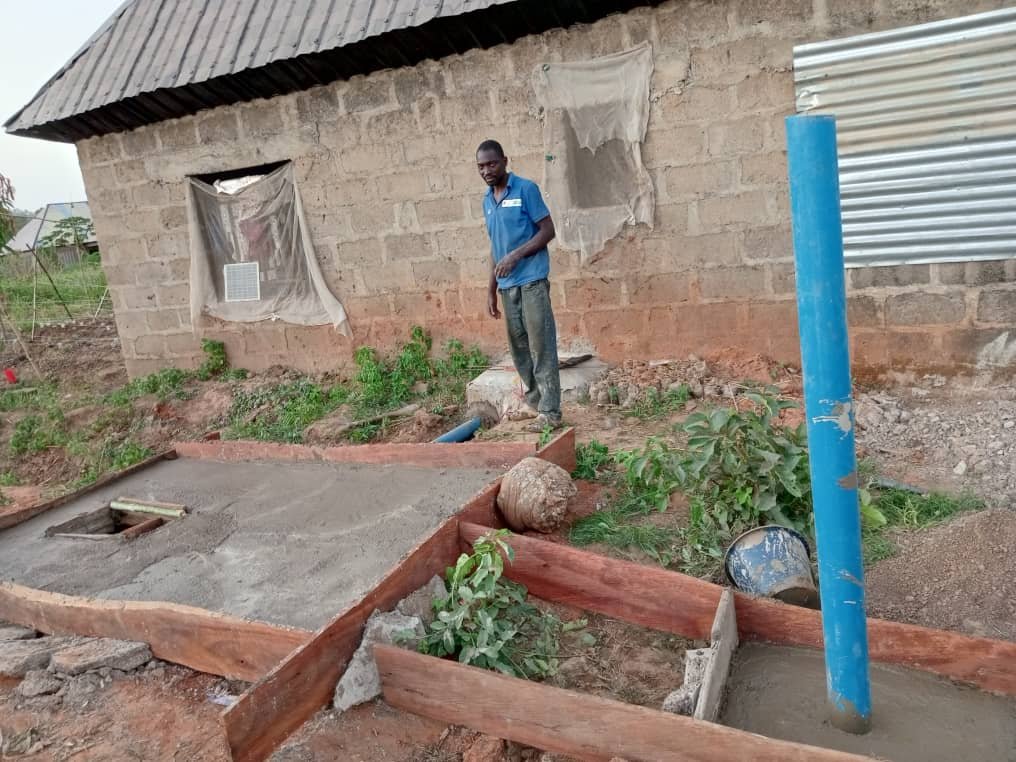
Moses working on the drain field for the toilet
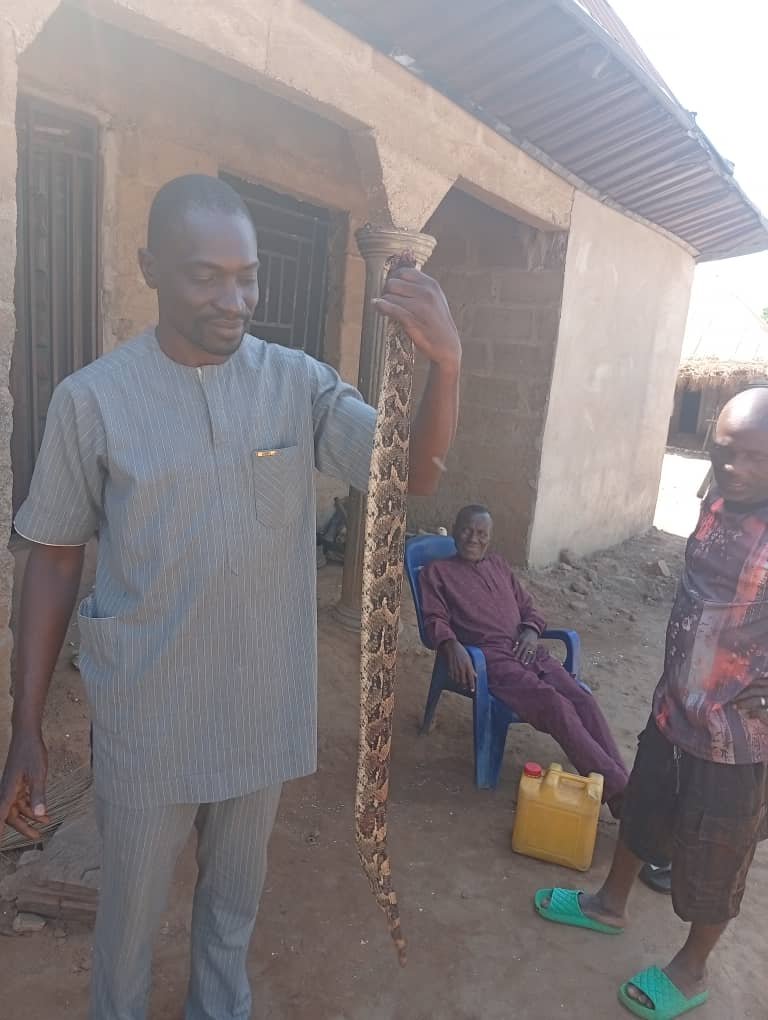
Moses and a puff adder. This type of snake is responsible for the greatest number of snake bite fatalities in Africa.
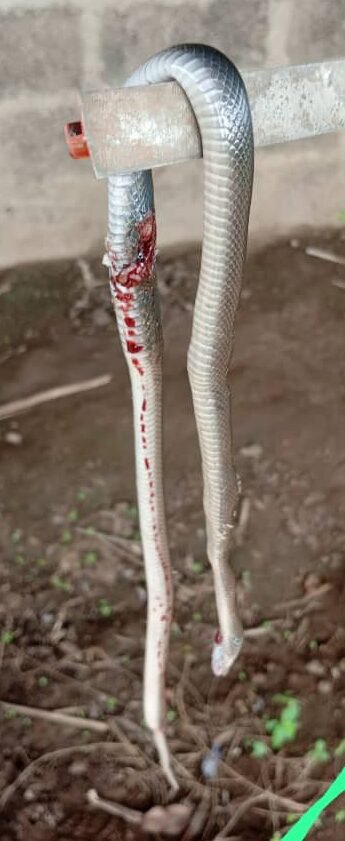
Another visitor in the home. Possibly a juvenile black mamba, or a stiletto snake, or perhaps some non-venomous species.
The needs in Agatu are great. There is great spiritual need, significant economic need, and a chronic lack of security.
Spiritual Need: In the initial survey of the several villages near the Agatu house, Moses reported that 90% of the teenagers were addicted to alcohol, there was rampant immorality with many young men having two or three "wives" and great apathy for education and the ways of Christ. While most people in Agatu would identify as Christians, many are also practicing African Traditional Religion (ATR) which is far from Christianity. But there is no evangelical church within walking distance so they also have never been taught or had good examples.
Economic Need: The area is quite impoverished. Without running water or electricity, people are reduced to using the stream nearby for all of their water needs. The stream is used for bathing and washing and the animals also come to the stream for water, and then of course, people drink it. Disease is constant. There are no schools within walking distance and people have little sense that efforts at improving their lot will have any effect. They are subsistence farmers with little hope of a better future, especially with the constant violent attacks in the region.
Insecurity: As in much of central and northern Nigeria, these predominantly Christian (at least in name) villages experience frequent attacks by well-armed militant Muslim groups. Moses had long felt called to live and preach among the Agatu, but the violence in the area made it impossible to begin the work until recently. When attacks happen, people flee their farms and disperse into the bush and often end up in camps for displaced people (IDP camps). For more information see "The Conflict" section below.
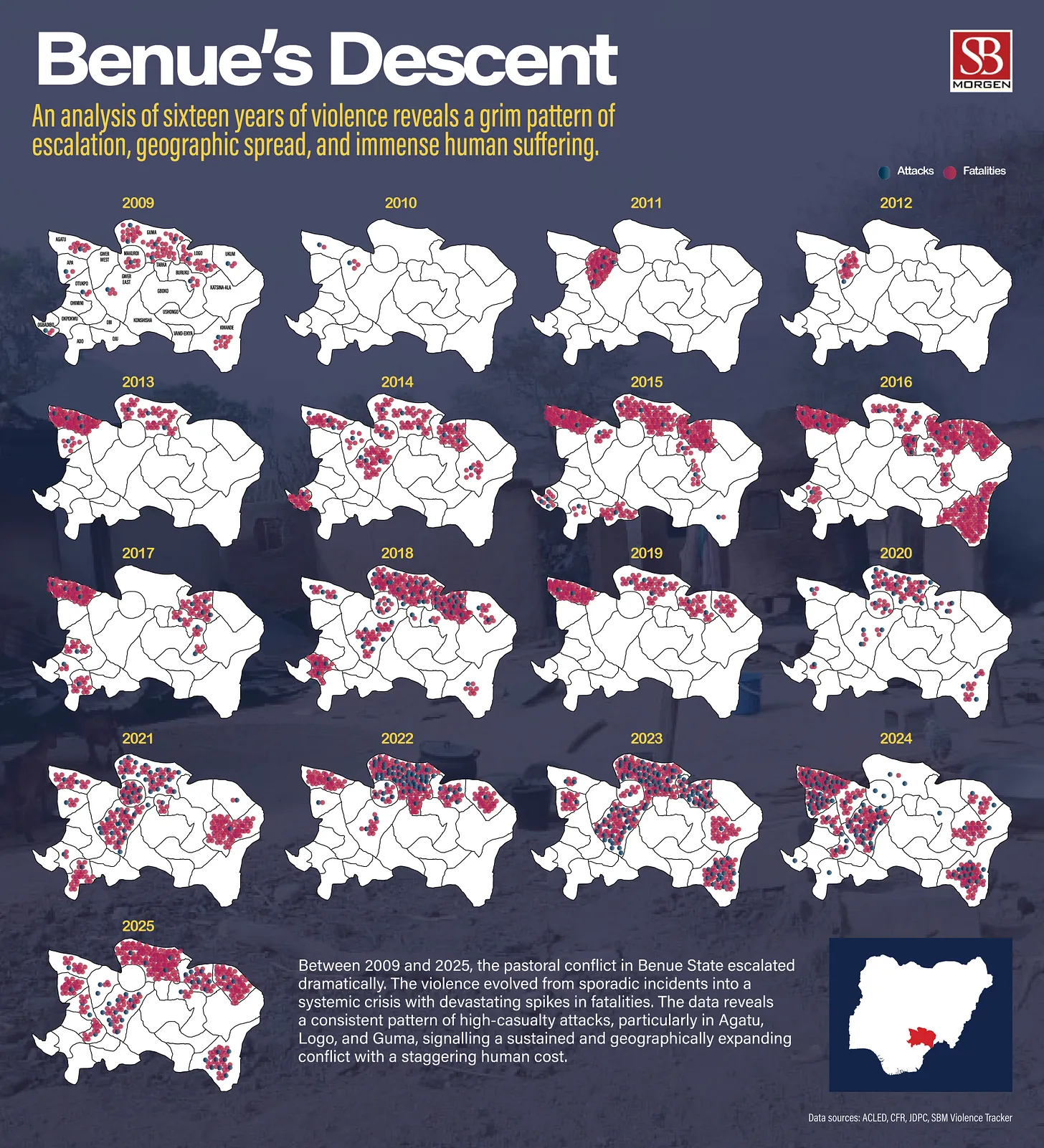
A graphic from SBM Intelligence showing the increase of violent attacks in Benue since 2009. Agatu LGA is in the upper left corner (northwest) and you can see how consistently it has been attacked for more than a decade. Violence often spreads along border - between states and between countries - because the militants can escape more easily by crossing a border. Also, they tend to advance along rivers, like the Benue river, which forms much of the northern border of Benue State.
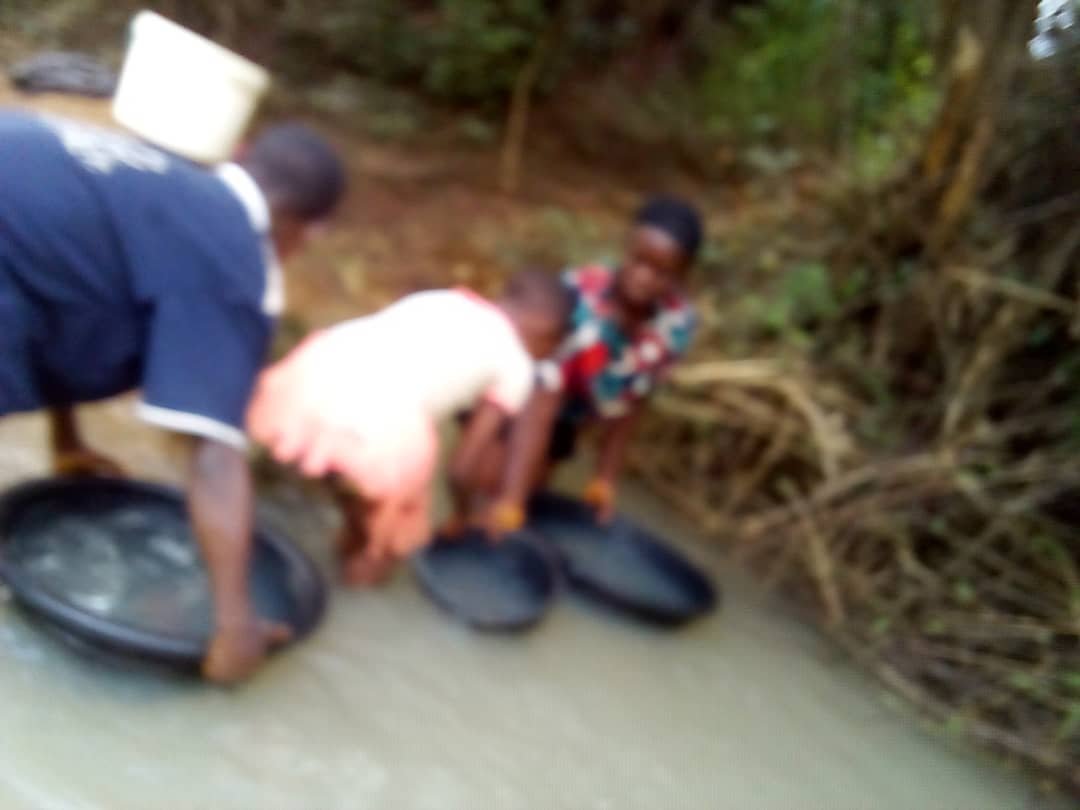
Blessing and her children fetching water from the stream.
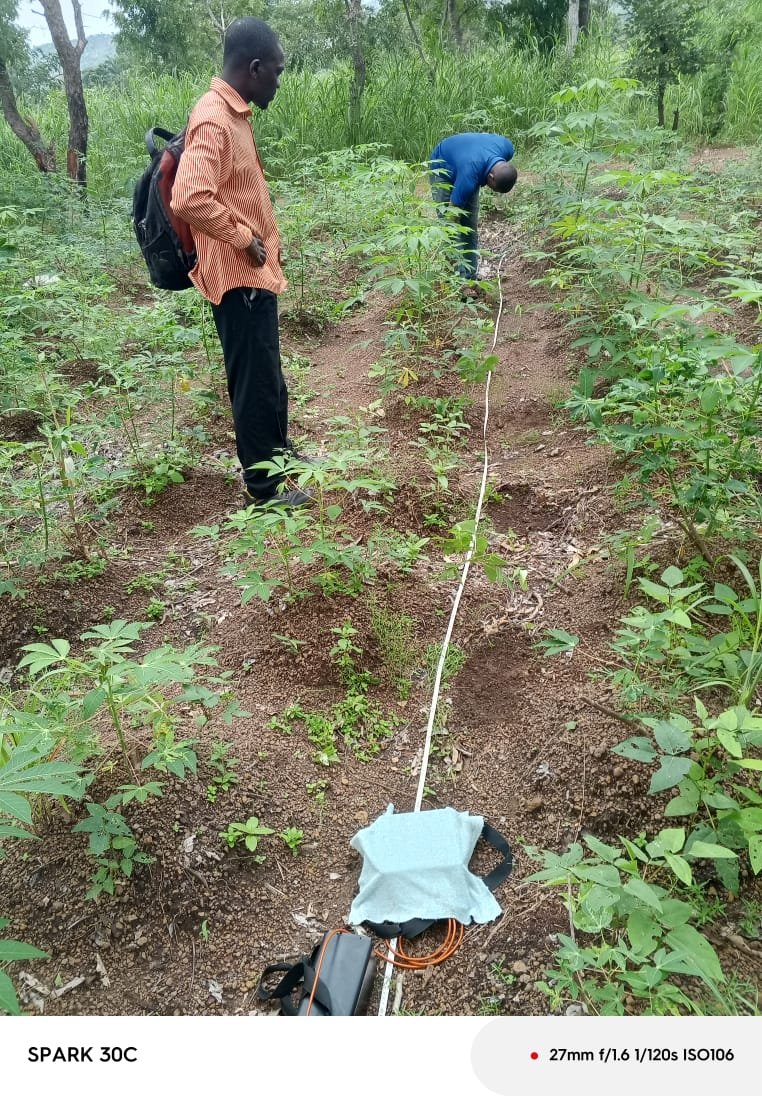
Moses and surveyor determining the best location for the well.
Currently, discipleship training is going well. Moses is teaching and encouraging those who were already believers when they arrived and also those who have come to faith through the missionary efforts. Facilities are still very limited, but people here are used to meeting under trees. He reports that there is a definite change in the community.
Efforts to provide a well for clean water for the community have begun. A survey has been conducted and a site chosen. The first phase is to drill the well and the second phase is to set up a solar pump and distribution system. STM is involved with helping fund this project. Moses gained enough credibility with the community from spearheading the well project that they allowed him to begin a more official school for children. Blessing has experience helping in the school on the main missionary training base in Plateau State, so she will be great help in Agatu.
Finally, supporters have stepped up to help fund Moses and his family at a level that needed to keep them on the field. It is one thing for a couple of men to pioneer a work with little support, but this is a difficult location and a family of 4 has needs. We know that this additional financial support and the prayers that go along with it will be a great encouragement to them.
Throughout Nigeria, especially in the central and northern regions, attacks against Christians are daily and deadly (2). Most of the media, both international and Nigerian, continues to report this as a conflict between herders and famers over scarce land, with the unstated implication that both sides are equally at fault. The problem with this narrative is that researchers have shown that the number of violent attacks on Fulani herders by Christian farmers has been low (3), while the frequency, scale and sophistication of attacks by Fulani herders on Christian farmers is at crisis levels (4) that many are now calling genocide. A recent example was a horrendous attack in Benue in June 2025.(1) The Fulani militants started by overwhelming a police post in the area, killing 2 policemen. While the police were neutralized by the superior arms and number of the militants, a second group attacked the defenseless Yelewata village. Most of the victims were shot or hacked to death with machetes. Dozens of children were locked in homes which were then burned waiting for the flaming roofs to eventually collapse on top of them (5). This was clearly a coordinated attack of terrorists, intended to instill fear and horror, not a simple reprisal for someone stealing a Fulani cow that was grazing on their crops. The fact that all of the militants appear to be Muslim, often shouting "Allah is great" during their attacks (7), and the fact that their victims are nearly all unarmed, subsistence farming Christians, are rarely reported. Nor is it reported that these tribes that are being attacked have lived and farmed these lands for many generations, some going back to precolonial times, and they have legal titles to the land. The militants, on the other hand seem to have recently come from other places and are rarely brought to justice. No one in this most recent attack has yet been apprehended and hundreds of farmers have fled their farms to already crowded IDP camps for safety.
Your prayers for peace are needed. Our brothers and sisters in Christ are being relentlessly slaughtered, and more in Nigeria than anywhere else in the world (6). Ultimately the battle is not against flesh and blood, but against the enemy of our souls. Prayer is our ultimate weapon and you know how to pray. We are grateful that AMEN and B4G staff are safe for now, and that the main AMEN base in Plateau State, which hosts several hundred people daily, has been provisioned by the Nigerian government with a small, permanent, detachment of soldiers.
2. Benue widows describe the murders of their husbands - Isaac translates (2023)
4. Mounting Death Toll and Looming Humanitarian Crisis (Amnesty International Nigeria)
5. Video evidence of terrorism against children in Yelewata village: Please be advised - this video forwarded to us by Naomi is graphic and very disturbing - you will not see it on any news service - but if you are someone who must see to believe the extent of the evil, here it is. The video is from Yelewata village immediately after the attacks of this weekend. It gives stark visual documentation of the many children burned to death while forcibly trapped in their homes. As stated above - this is what terrorists do. This is not the result of a simple land use disagreement. It is not a disagreement between two sides who are equally at fault. These Christian children were innocent under any system of justice, yet they were brutally murdered. This is evil and it truly originates in hell. The real enemy is unmasked and he is very ugly.
6. Open Doors statistics: More Christians die for their faith in Nigeria than any other country in the world.
7. While this first hand account below is not from Benue, it isn't far away and it is representative of the attacks going on throughout the region. This account is of the recent Bokkos area attacks from a high school girl named Uren:
My name is Uren. I am from Hurti, a small village in Daffo, Bokkos LGA of Plateau State. I am in SS3 at GSS Manguna [a high school senior].
In Bokkos LGA, we farm potatoes, maize and whatever the land agrees to yield, because that is what we know best. That is how we survive. Occasionally, we trade. But it is the land that feeds us.
At the weekend, my people, the Ron and Kulere, held our yearly festival. People came from all over. Not because everything was all right, but because the festival gave us strength. It reminded us that we are still here. We are still alive. And even though we keep losing people, we cannot stop living. Besides, we know everyone will die someday.
On Wednesday morning, before the sun rose, my mother reminded me that we needed to head to the farm early, before the heat turned cruel and our energy, too drained to respond. There is always work to be done on the farm; come rain, come sun, dry or green. Life in our village follows that rhythm.
For some reason, that morning, I woke with the weight of Oswald's Nightfall in Soweto pressing heavily on my chest. Mr. Mallo, our literature teacher, had painted it vividly when he taught the poem. “Feel it. Poetry is meant to be felt,” he had said.
I felt it, all right. The fear. The dusk falling like judgment. I felt it because it was no longer just poetry. It was no longer Soweto. It was Plateau. It was Bokkos. It was home. It was real.
My classmate, Ukambong, told me that in their village, Josho and even in Ganda and Manguna, they no longer slept at night. Their fathers and brothers had taken to spending the night on the trees, like hunted animals. They went up there not to fight. Who brings a bow and arrow to face fire-spitting metals? They went there to act as sirens. Human alarms.
When the raiders came, they were the voices screaming, Run!
And the raiders? They always came.
In our history class, Mrs. Mafwil told us that once upon a time, invaders galloped in on horses, with spears, bows and arrows slicing through the air with ancient rage. Today, they arrive on iron horses humming death and machines that spit fire and thunder.
They come knowing they will not be stopped.
They come knowing their mission has been carved into the silence of complicity.
They come. They slaughter. They leave. And they come again, at will. Their faces are not hidden. Their names are whispered. Their language betrays who they are. Yet, they remain unknown. Somehow, always unknown.
That Wednesday, they walked into our morning as we worked on the farm—my mother, father, five siblings and I, clearing the land so we could plant soon. We were engrossed in tearing up weeds with calloused hands, brushing the earth off our feet, when we heard the buzzing of motorbikes, many of them, and the cracking of gunfire all around.
It was loud and close. A rhythm now too familiar. First at night, now in broad daylight. A group of attackers was moving in on our village and the nearby ones too.
We froze, not knowing what to do. Smoke began rising, big, black clouds. Houses were burning. We saw people running, screaming. It was not near yet, but the land is flat; we could see everything. We were certain the attackers had seen us. One cannot hide easily out there. My mother’s face twisted. “Home,” she whispered and broke into a run. But my father ran after her and held her back. She began to shiver. “My children, my children,” she said, as tears welled up in her eyes.
My two younger sisters were at home, one sick, the other left to look after her. The ground where my mother stood turned wet. She had urinated on herself out of fear. The sky was no longer blue. It had become a sheet of thick black smoke. In the distance, homes coughed fire and people ran like ants from an overturned nest. Screams scattered in the wind. The attackers chased those who ran toward our farm. They were coming. We had been seen. The land offers no cover here. It is flat and wide. It betrays you.
My father’s mind raced faster than the bikes. He pointed to a narrow hole. It looked like one of those where something was mined from. The opening was wide enough for us to squeeze through and we did. We did not ask what was inside. We did not think where it led to. We just entered.
The smell around was of damp and death. We squeezed in, my siblings and I, while my parents and one of my brothers covered the hole with dry leaves and grass. They stayed outside. There was no room for all of us. From that tiny breath-hole, I watched.
The men on bikes came. Five of them. Guns slung carelessly like tools of a craft they had effortlessly mastered. But they chose to use knives instead. Long, rusted, personal. They circled my parents and brother like wolves around a tired prey. They chanted a God is great prayer to a God they no longer feared. And then, they cut wherever their razors could reach. Blood.
My father begged, his voice cracking like old wood. My mother shrieked as they cut, and then they cut and struck my brother down with the butt of a gun.
They spoke in Hausa with a Fulani accent: “Shegu jamu kakashe dukan ku!”
Then more chants of “God is great,” and more bikes revving into the distance. Their glee carried by gunshots and war cries: Eeehhuuhuuuuu! rent the air as they made their way to join the others. And then, there was silence, except for my mother’s wail. It was sharp and soul-piercing. She crawled to my brother’s lifeless body and pulled it close as though she could tuck him back into her womb.
My father just sat there, blood pooling around him. His eyes were vacant. He was staring, like he could see a world we could not. When I could not take it in anymore. I blacked out. My young mind gave up.
By the time I finally came around, I learnt that my father did not make it to the next day. My two sisters who were left at home were slaughtered. With knives. My mother is still in shock. My other brothers and I are just hanging in there.
We saw the assailants, what they looked like, the language they spoke how they prayed to the god they prayed to. We also know that their kind occupy many of the villages around that were razed before now.
It is said that when people are pushed to the wall, they will push back, not out of bravery, but out of necessity. I fear what will happen now that we are at the edge of that point. Survival is not cowardice. It is instinct. But how long do you stay law-abiding while the law does not see your blood as worth avenging?
How long do you bow to a system that rewards those who live outside it?
First it was Jos, now christened “Jos crisis”, then Riyom, Barkin Ladi, Bassa, Mangu, Wase, Kanam. Everywhere on the Plateau is getting a taste of the 21st-century jihad. I hear that there are people who gain from the fire. People who watch it from high windows and sip their tea. People who call for peace but fund the bullets. And then, there are people like me, Uren, who only ever wanted to farm, to live and to love my land.
If you want more information on the Fulani raiders, you can watch a BBC documentary from 2022 called The Bandit Warlords of Zamfara. It is from a more northern area of Nigeria, but much of the information is applicable. Please note that it is very graphic and not suitable for all viewers.
Please contact us if you'd like to change your preference on how you get STM Updates -> via text, email, or if you want to stop.

Photos & Video: ©Azigbo Dafe Samuel, ©AMEN, or ©Sharing the Mission - all used by permission. More info.